Winter does not turn Valle de la Luna into a conventional cold-weather attraction. The valley remains a high, dry desert landscape where a clear morning can feel sharply cold before the sun becomes powerful, and where wind can matter more than the temperature printed in a forecast. The useful question is therefore not simply whether winter is a good season. It is whether the operating window, trail status, transport, clothing and pace are aligned on the particular day you intend to visit.
Official information checked on 18 July 2026 gives winter-specific guidance. The Valle de la Luna operator lists April-to-August entry from 08:00 to 16:00 for motorized visitors, bicycle entry from 08:00 to 11:00, and Ckari sector entry from 10:30 to 18:00. CONAF also describes winter walking difficulty as moderate on several Sector 6 trails and notes that sandstorms, strong winds or airborne material can lead to temporary closures. These are planning references, not promises: notices and conditions can change.
This guide turns those facts into decisions. It explains which source to check, how to read a regional forecast without mistaking it for a site report, how to dress for cold shade and strong sun, and how to reduce the itinerary when wind or fatigue changes the day. It complements the general visit guide and sunset guide rather than replacing them.
Continue with: Valle de la Luna access and ticket guide, desert safety and equipment checklist, time-slot and sunset planning guide.
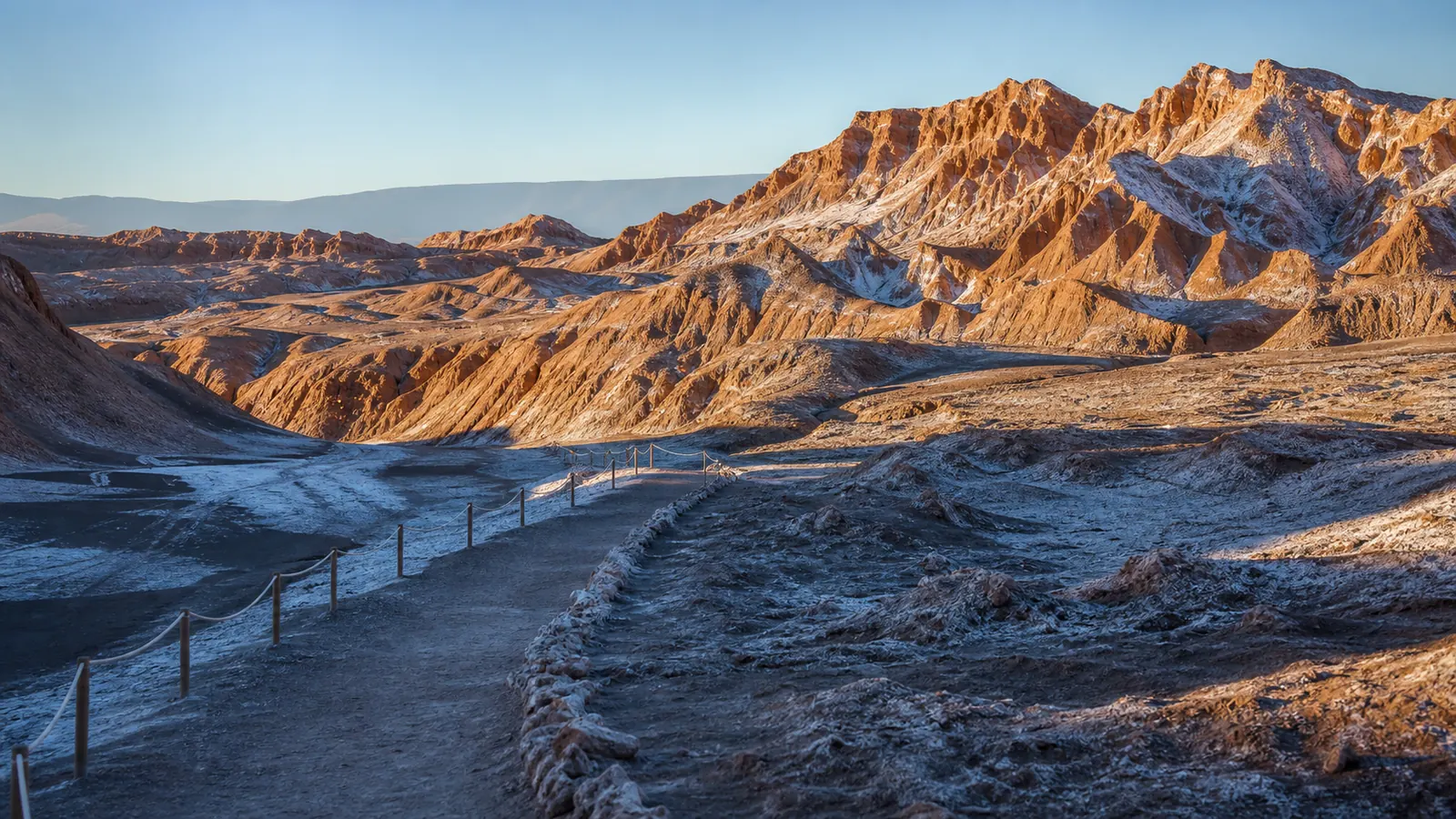
Start with the winter operating window, not sunset time
The first winter constraint is operational. On the official Valle de la Luna site, the April-to-August schedule checked for this article allows bicycles to enter from 08:00 to 11:00 and motorized visitors from 08:00 to 16:00. The Ckari viewpoint sector is listed separately from 10:30 to 18:00. A general reserve page may display broader opening information, so use the sector-specific operator notice for the immediate plan and treat CONAF as the authority for reserve rules, trail risks and closures.
Do not translate a last entry time into a guaranteed full visit. Parking, ticket validation, instructions, closed sectors and the time needed to return can reduce what is realistic. A plan that arrives close to the final entry has no useful margin when a trail is temporarily restricted. In winter, it is better to choose two or three meaningful stops than to rely on completing every named trail before the gate closes.
Ticket conditions also need a fresh check. CONAF currently recommends buying the Valle de la Luna entry at least one day in advance through the official system and displays prices, but the article deliberately does not turn those figures into a permanent promise. Confirm the price, visitor category, date, name requirements and refund or change conditions at checkout. Keep the ticket available offline because mobile data can be inconsistent away from town.
A three-source check that takes five minutes
Open the official Valle de la Luna site for the current sector timetable and ticket link. Open the CONAF page for Reserva Nacional Los Flamencos for reserve notices, trail risks and conduct rules. Finally, check the Dirección Meteorológica de Chile or another official forecast for the San Pedro and Calama area, while remembering that a regional station cannot confirm conditions inside one valley.
If the sources disagree, do not average the times. Use the newest dated notice, contact the operator, and build the itinerary around the more conservative window until you receive confirmation.
- Save the current notice or screenshot with its date.
- Check again before leaving San Pedro de Atacama.
- Ask staff which trails are open when you arrive.
Read winter temperature as a range, not one number
A winter forecast often encourages the wrong packing decision because travelers focus on the afternoon maximum. Nearby official observations can show a very large difference between the coldest part of the morning and the warmest part of the day. For example, the Dirección Meteorológica de Chile daily report for 14 July 2026 recorded a minimum below freezing and a much warmer afternoon at Calama airport. That is regional evidence of a daily swing, not a direct forecast for Valle de la Luna.
Inside the valley, sun exposure, shade, wind and the timing of stops change comfort quickly. A person waiting beside a vehicle can feel colder than someone walking; a sheltered ridge can feel warm while an exposed viewpoint remains uncomfortable. Instead of packing for a single temperature, pack for transitions: a cold departure from San Pedro, a bright middle of the visit, and a cooler return if the sun drops or wind increases.
Use layers that can be adjusted without emptying the whole bag. A breathable base, a warm light layer and a wind-resistant outer shell cover more situations than one bulky coat. Closed shoes help on dusty, uneven surfaces. A hat, sunglasses and sunscreen still belong in the winter kit because cold air does not remove solar exposure. Carry enough water for the planned duration and keep some in reserve for delays.
What the forecast cannot tell you
A weather app cannot confirm whether Duna Mayor, Cornisa, Mina Victoria, Achache, Tres Marías or Ckari is open. It also cannot replace instructions given by local staff when wind is moving dust or loose material. Forecasts are useful for preparation; only the operating team can define access on the day.
Treat a high wind forecast, a dust advisory or an abrupt temperature change as a reason to shorten the plan, not as a challenge to overcome. The landscape will still be there on another day.
Make wind and sandstorm closures part of the plan
Winter wind is not merely an inconvenience for photographs. CONAF lists strong winds with airborne material among the risks on several Valle de la Luna routes and states that trails can close during winter sandstorms. The Cornisa, Achache and Ckari descriptions specifically mention rockfall or strong wind risks, while other Sector 6 routes also note occasional weather closures. A closure is a protective operating decision, not a service failure.
Build a Plan B before buying a tightly scheduled sequence of tours. If a trail closes, use only the sectors staff confirms are open, spend more time reading the landscape from authorized viewpoints, or return to San Pedro rather than improvising beyond a barrier. Do not follow another visitor around a closure sign. Loose surfaces and reduced visibility can make a familiar-looking shortcut much less predictable.
Wind also changes small practical choices. Protect eyes with close-fitting sunglasses, secure a hat, keep camera changes to a minimum, and store light packaging inside the bag. If dust becomes uncomfortable, move back to the vehicle or a protected area approved by staff. A scarf or buff can improve comfort, but it is not protective equipment that makes a closed route acceptable.
Photography in moving dust
Use one lens when possible and change it only in a sheltered place. Keep the tripod low, never block the marked route, and abandon a composition if it requires crossing a boundary. Winter clarity can be excellent without putting equipment or people in exposed positions.
The strongest responsible image often includes the marked route or the scale of the ridges. There is no need to manufacture isolation by stepping into protected terrain.
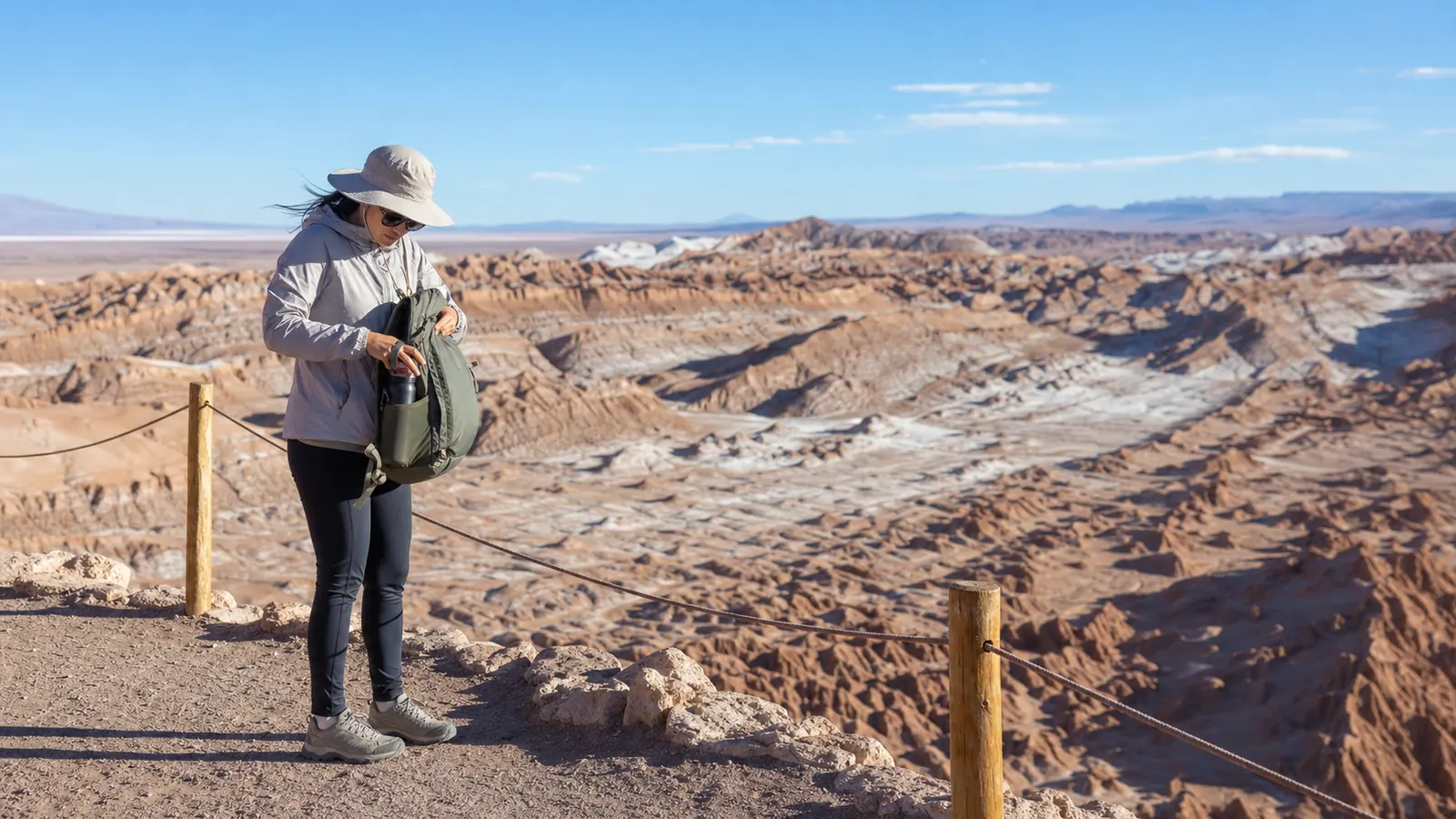
Choose transport that matches the shorter window
Official information states that visitors cannot enter the main site on foot; access requires a bicycle or motorized vehicle within the applicable entry window. This is important in winter because a late start cannot be repaired by walking from town. Confirm how you will reach the entrance, how long ticket and vehicle checks may take, and how you will return before committing to a second activity.
Cycling offers independence but has the narrowest entry window: the official site lists 08:00 to 11:00 from April to August. Cold morning air, wind on the return and the effort of the route all need consideration. A cyclist should be comfortable with desert riding, carry repair essentials, have visible layers, and accept turning back early. A tour may reduce navigation and parking decisions, but pickup times and the exact route still need confirmation.
Drivers should check fuel, tire condition and the rental agreement before leaving town. Do not use an ordinary rental as permission to enter an unapproved road. Stay on the authorized vehicle circuit and follow parking instructions. If a sector closes, never create a substitute stop on the roadside where sightlines, fragile ground or local access rules make stopping inappropriate.
Match transport to the visitor, not the image
Families, older visitors and people managing mobility or respiratory concerns may benefit from a simpler vehicle-based plan with fewer exposed stops. Contact the operator before travel for current accessibility information because terrain and open sectors can change.
A bicycle is not automatically the most responsible choice if conditions exceed the rider's ability. Responsibility means choosing a mode that can stay within the official route and return safely.
Use a winter pace that leaves room for altitude and dryness
San Pedro de Atacama already places many visitors in a drier and higher environment than they use at home. Winter can hide exertion because the air feels cool, but dehydration and fatigue do not disappear. Make Valle de la Luna a lighter first-day activity if you have just arrived, especially after a flight and road transfer. Eat normally, drink regularly and avoid turning the visit into a fitness test.
Short stops can still create a strong experience. Step out, orient yourself, follow the marked trail at a conversational pace, and reassess comfort before adding another section. Headache, unusual breathlessness, dizziness, chest discomfort or confusion are not signals to push through. Return to a safe place and seek appropriate help. This guide provides planning information, not medical clearance.
Children may become cold, thirsty or tired before adults notice the change. Keep the visit shorter, protect them from wind and sun, and avoid schedules that depend on a perfect sunset ending. Anyone with a relevant health condition should seek personal medical advice before the trip and should know how to contact assistance locally.
A useful definition of success
A successful winter visit is not the number of trails completed. It is returning with energy, having followed every local instruction and understanding more of the Cordillera de la Sal than when you arrived.
Leave at the point when attention and comfort begin to fall, not only when the official closing time forces the decision.
Respect a protected and co-managed landscape
Valle de la Luna is Sector 6 of Reserva Nacional Los Flamencos and is managed within a landscape connected to Lickanantay communities. That context changes the visitor's role. Marked routes are not optional suggestions, and empty-looking land is not automatically open for exploration. Follow park rangers, guides and local operators, and prefer areas specifically enabled for tourism.
CONAF rules prohibit leaving trails, extracting stones or other natural material, littering, bringing pets, using fire, smoking, alcohol and disruptive noise. Drones are not permitted for ordinary visitors; professional or research use requires prior authorization. These rules protect fragile formations, wildlife, staff and other visitors. They also prevent social-media images from normalizing behavior that the site explicitly rejects.
Carry all waste out or place it in the designated system. Use a reusable bottle and keep light wrappers secured against wind. Never stack stones, scratch salt surfaces or move beyond a boundary for a cleaner frame. If another visitor breaks a rule, do not copy the behavior and do not create a confrontation in an exposed area; alert staff when appropriate.
Winter does not reduce conservation responsibility
Fewer people in one time slot can make the landscape feel open, but low crowding does not expand the visitor zone. Salt crusts and clay formations remain vulnerable.
Responsible travel is visible in small actions: a contained route, quiet behavior, honest captions and no image that suggests unauthorized access.
Run a final day-of checklist before leaving San Pedro
Begin with status, not optimism. Confirm that your ticket date is correct, the sector is open, the planned transport is accepted and the current winter entry window has not changed. Read new closure notices in full, including the hours affected and whether Ckari or another sector follows a different schedule. If information remains unclear, contact the official operator before driving out.
Then check conditions and equipment. Look at the official regional forecast, note wind and temperature changes, and pack the layers, water, sun protection, closed shoes and charged phone you will actually carry. Download the ticket, route notes and emergency contacts. Tell someone your plan if traveling independently, while avoiding the false confidence of assuming mobile coverage everywhere.
Finally, simplify. Choose the essential viewpoint or trail, identify what you will drop first if entry is delayed, and leave time for the return. Agree in advance that any staff closure, worsening wind or visitor discomfort ends that part of the plan. This makes adaptation a planned decision rather than a disappointment made under pressure.
- Official site and CONAF notice checked today
- Ticket and identity requirements confirmed
- Transport and winter entry window confirmed
- Layers, wind shell, hat, sunglasses, sunscreen and water packed
- Two priority stops chosen and optional stops identified
- No drone, pet, fire, alcohol or off-trail plan
- Return time and cancellation rule agreed
The winter advantage is clarity, not certainty
Valle de la Luna in winter can offer crisp light, cooler walking conditions and a more deliberate rhythm. It also asks visitors to work with a shorter sector timetable, cold-to-warm transitions, strong sun, wind and possible temporary trail closures. None of those conditions is a reason to avoid the valley. They are reasons to prepare with better sources and more margin.
Check the sector operator, CONAF and official weather information again on the day. Dress in adjustable layers, choose transport that fits the winter window, reduce the plan before conditions force you to, and stay inside every marked route. The result is not only safer and calmer; it is a more honest way to experience a protected desert.
Frequently asked questions
Is Valle de la Luna open in July?
The site operates in winter, but hours and sectors can change. The official schedule checked on 18 July 2026 listed April-to-August motorized entry from 08:00 to 16:00, bicycle entry from 08:00 to 11:00 and separate Ckari hours. Verify again on your visit date.
Does it snow in Valle de la Luna in winter?
Do not plan around snow. The practical winter issues are cold starts, dry air, strong sun, wind and dust. Use an official forecast for the date and do not infer site conditions from images or a regional headline.
Can winter wind close the trails?
Yes. CONAF notes occasional winter sandstorm closures and strong-wind or airborne-material risks on several Sector 6 routes. Follow staff decisions and never bypass a closure.
What should I wear?
Use adjustable layers: a breathable base, light insulation and a wind-resistant shell, plus closed shoes, hat, sunglasses and sunscreen. Carry water even when the air feels cold.
Can I walk to the site from San Pedro?
Official information says the main site cannot be entered on foot; visitors need an accepted bicycle or motorized vehicle and must respect the applicable entry window.
Sources and editorial caution
- Reserva Nacional Los Flamencos — Corporación Nacional Forestal (CONAF)
- Valle de la Luna opening hours — Asociación Indígena Valle de la Luna
- San Pedro de Atacama INIA station data — Dirección Meteorológica de Chile
- San Pedro de Atacama: the best time to travel — Chile Travel