This guide is written for travelers who want beautiful light without turning the visit into a crowded race. The goal is to handle choosing the best time slot with practical judgment: what to check, what to avoid, and how to keep enough margin for the desert to feel memorable rather than stressful.
The promise is simple: choose a time that fits the real rhythm of the trip, not only a photo seen on social media. Keep the San Pedro de Atacama itinerary ideas and the Valle de la Luna opening and access guide open as companions, because they turn this advice into day-of decisions.
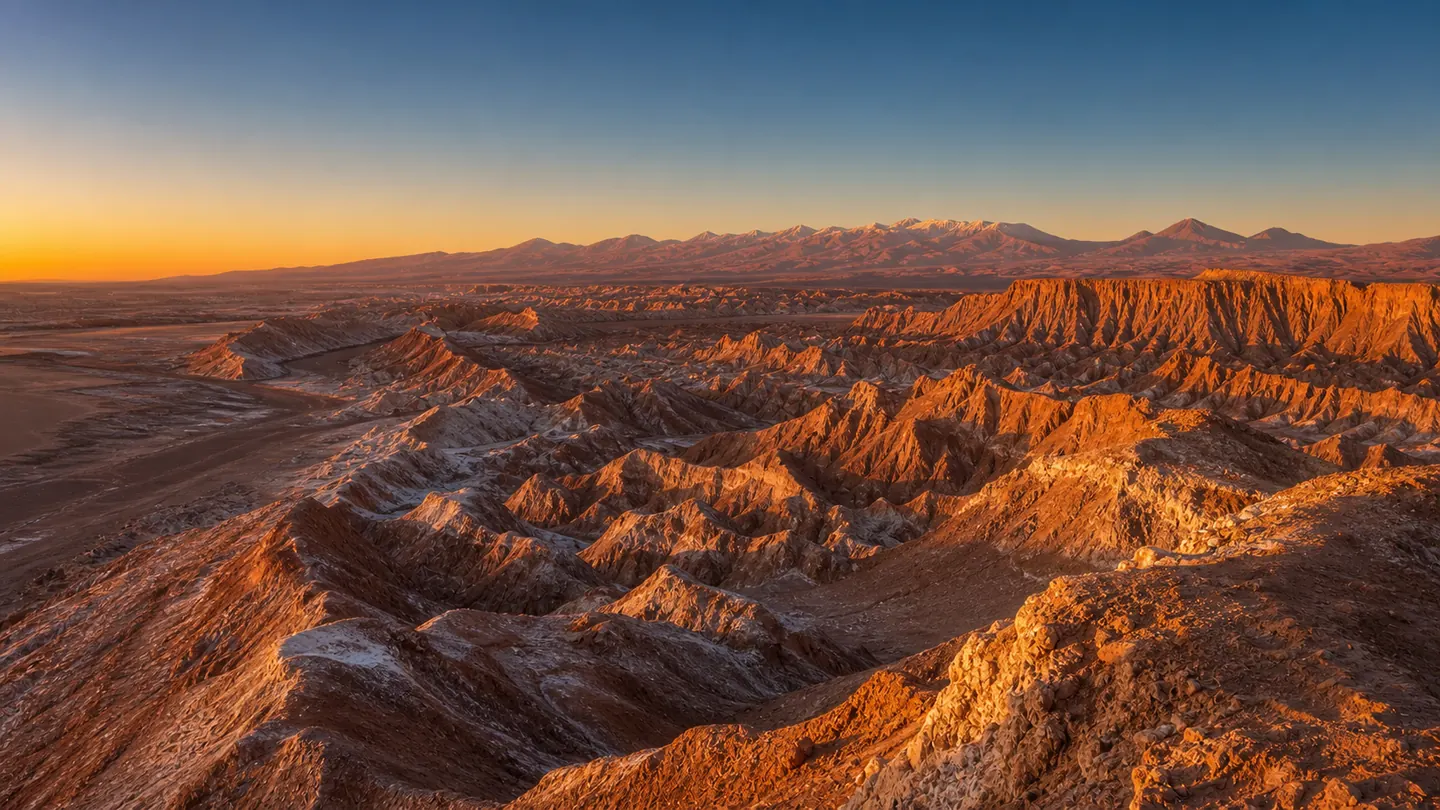
Why sunset is so popular
This matters because ochre ridges and salt deposits react strongly to low-angle light. A successful visit starts with this level of reading: before thinking about photos, transport or the next excursion, understand the constraint that shapes the day.
In practice, long shadows give depth to the crests and make the landscape easier to read. That means accepting adaptation. Valle de la Luna is not an urban attraction with the same script every day; safety and conservation come first.
Practical application
- Ochre ridges and salt deposits react strongly to low-angle light.
- Long shadows give depth to the crests and make the landscape easier to read.
- That beauty also attracts groups, so extra margin becomes essential.
Turn this into one simple action: verify, reduce the plan if needed, then keep time to observe. This method makes the experience calmer, more professional and more respectful of the place.
The point is not to make the itinerary more complicated. It is to remove fragile assumptions before they create stress on site. When the plan has room to breathe, the same landscape becomes easier to understand, safer to enjoy and more memorable after the trip.
Morning: the calmer option
This matters because morning can be simpler for understanding geology and walking without intense heat. A successful visit starts with this level of reading: before thinking about photos, transport or the next excursion, understand the constraint that shapes the day.
In practice, the colors are less dramatic but the contrasts remain clean under a clear sky. That means accepting adaptation. Valle de la Luna is not an urban attraction with the same script every day; safety and conservation come first.
Practical application
- Morning can be simpler for understanding geology and walking without intense heat.
- The colors are less dramatic but the contrasts remain clean under a clear sky.
- It is often the most rational option for families or cyclists.
Turn this into one simple action: verify, reduce the plan if needed, then keep time to observe. This method makes the experience calmer, more professional and more respectful of the place.
The point is not to make the itinerary more complicated. It is to remove fragile assumptions before they create stress on site. When the plan has room to breathe, the same landscape becomes easier to understand, safer to enjoy and more memorable after the trip.
Afternoon: a useful compromise
This matters because afternoon prepares the golden light but also concentrates heat, wind and traffic. A successful visit starts with this level of reading: before thinking about photos, transport or the next excursion, understand the constraint that shapes the day.
In practice, leaving too late reduces flexibility if entry takes time or a sector is closed. That means accepting adaptation. Valle de la Luna is not an urban attraction with the same script every day; safety and conservation come first.
Practical application
- Afternoon prepares the golden light but also concentrates heat, wind and traffic.
- Leaving too late reduces flexibility if entry takes time or a sector is closed.
- It is better to choose a few strong stops than to tick off everything.
Turn this into one simple action: verify, reduce the plan if needed, then keep time to observe. This method makes the experience calmer, more professional and more respectful of the place.
The point is not to make the itinerary more complicated. It is to remove fragile assumptions before they create stress on site. When the plan has room to breathe, the same landscape becomes easier to understand, safer to enjoy and more memorable after the trip.
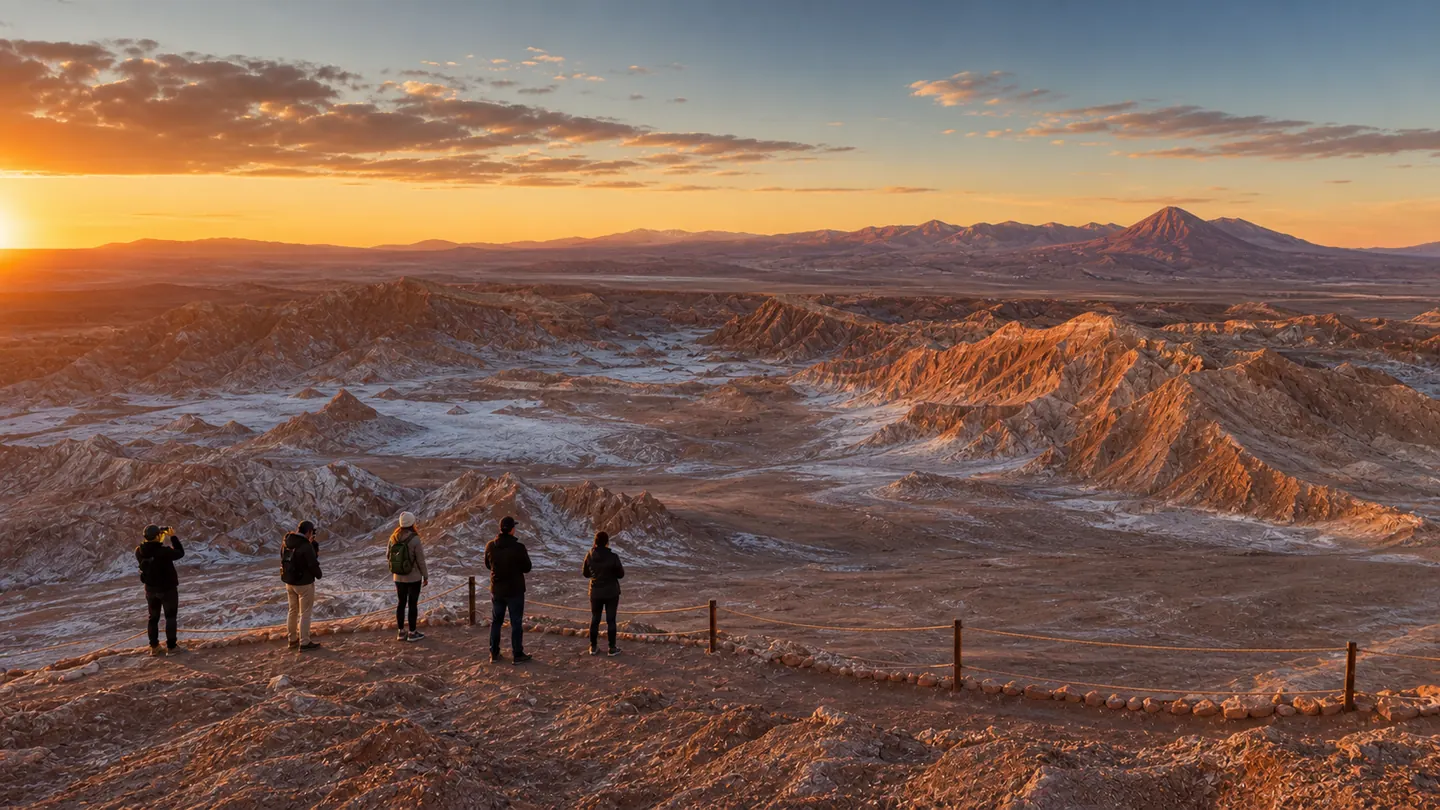
Seasons and desert weather
This matters because the site can be visited year-round, but seasonal hours and conditions matter. A successful visit starts with this level of reading: before thinking about photos, transport or the next excursion, understand the constraint that shapes the day.
In practice, the air can be very dry, wind can rise suddenly and dust events may force adjustments. That means accepting adaptation. Valle de la Luna is not an urban attraction with the same script every day; safety and conservation come first.
Practical application
- The site can be visited year-round, but seasonal hours and conditions matter.
- The air can be very dry, wind can rise suddenly and dust events may force adjustments.
- Recent official notices are a reminder that the desert is an active environment, not a fixed backdrop.
Turn this into one simple action: verify, reduce the plan if needed, then keep time to observe. This method makes the experience calmer, more professional and more respectful of the place.
The point is not to make the itinerary more complicated. It is to remove fragile assumptions before they create stress on site. When the plan has room to breathe, the same landscape becomes easier to understand, safer to enjoy and more memorable after the trip.
Crowds, photos and the real experience
This matters because a great photo does not guarantee a great visit if all your energy goes into avoiding other tripods. A successful visit starts with this level of reading: before thinking about photos, transport or the next excursion, understand the constraint that shapes the day.
In practice, popular viewpoints require patience and respect for safety boundaries. That means accepting adaptation. Valle de la Luna is not an urban attraction with the same script every day; safety and conservation come first.
Practical application
- A great photo does not guarantee a great visit if all your energy goes into avoiding other tripods.
- Popular viewpoints require patience and respect for safety boundaries.
- A simpler composition made before or after peak crowding often tells the place better.
Turn this into one simple action: verify, reduce the plan if needed, then keep time to observe. This method makes the experience calmer, more professional and more respectful of the place.
The point is not to make the itinerary more complicated. It is to remove fragile assumptions before they create stress on site. When the plan has room to breathe, the same landscape becomes easier to understand, safer to enjoy and more memorable after the trip.
Choose according to your profile
This matters because a photographer may accept wind and waiting more easily than a family with children. A successful visit starts with this level of reading: before thinking about photos, transport or the next excursion, understand the constraint that shapes the day.
In practice, independent travelers can shift timing more easily than a shared tour group. That means accepting adaptation. Valle de la Luna is not an urban attraction with the same script every day; safety and conservation come first.
Practical application
- A photographer may accept wind and waiting more easily than a family with children.
- Independent travelers can shift timing more easily than a shared tour group.
- The best time is where light, fatigue and official constraints remain compatible.
Turn this into one simple action: verify, reduce the plan if needed, then keep time to observe. This method makes the experience calmer, more professional and more respectful of the place.
The point is not to make the itinerary more complicated. It is to remove fragile assumptions before they create stress on site. When the plan has room to breathe, the same landscape becomes easier to understand, safer to enjoy and more memorable after the trip.
Action plan before you go
Use this checklist before committing to the day:
- Check official hours, ticket rules, open sectors and weather notices.
- Choose one main goal: landscape reading, sunset, photography, family comfort or transport decision.
- Carry water, sun protection, a wind layer and closed shoes.
- Keep margin for entry, stops, instructions and the return.
- Stay inside authorized areas even if another visitor crosses a boundary.
- Adjust the plan if wind, dust, heat or fatigue changes the experience.
- Prepare photos without blocking viewpoints or encouraging risky behavior.
- Read official temporary notices again before leaving San Pedro.
This plan does not try to make Atacama predictable. It gives enough structure for surprises to remain manageable, which is exactly what a fragile desert landscape requires.
Frequently asked questions
Is sunset essential?
No. It can be spectacular, but a morning visit may be more comfortable and clearer for understanding the landscape.
Which season is best?
Valle de la Luna can be visited throughout the year, but seasonal hours and weather notices should be checked before locking the plan.
Should I arrive early for sunset?
Yes. Extra time reduces stress and allows you to follow site instructions without rushing.
Can wind spoil the visit?
It can mainly affect comfort. A light jacket, sunglasses and camera protection help a lot.
Can I stay after dark?
Do not assume night access. Official exit rules and opening hours always come first.
Sources and editorial caution
Practical details change. Opening hours, prices, closures and site rules must be checked on the official Valle de la Luna ticketing channel and the CONAF page for Reserva Nacional Los Flamencos before making a final plan.