This guide is written for travelers, creators and slow planners who want Valle de la Luna to fit inside a wider, coherent journey through Atacama, South America or a future long-haul contrast. The goal is to handle choosing the next travel chapter after Valle de la Luna with practical judgment: what to check, what to avoid, and how to keep enough margin for the desert to feel memorable rather than stressful.
The promise is simple: help you choose the next destination according to rhythm, altitude, light, story and recovery rather than only distance on a map. Keep the San Pedro de Atacama itinerary ideas and the Valle de la Luna visit guide open as companions, because they turn this advice into day-of decisions.
Some travelers like pairing extreme mineral landscapes with a future tropical journey. If that contrast is part of your personal route, a practical Thailand travel guide can help you compare pace, climate and logistics before choosing a very different next chapter.
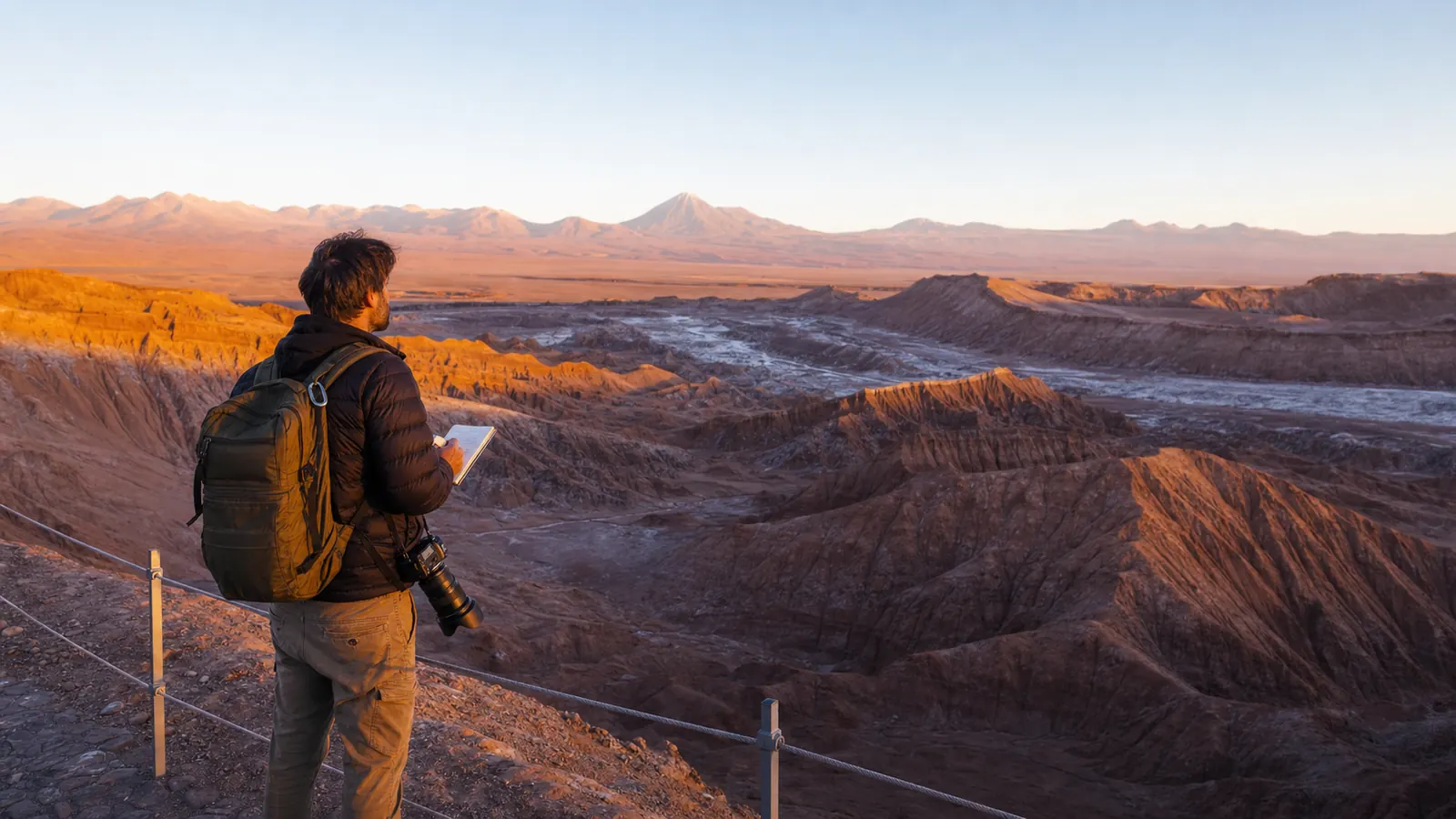
Start with the feeling Valle de la Luna leaves behind
This matters because valle de la Luna often feels like a finale because sunset, ridges and silence create a strong emotional peak. A successful visit starts with this level of reading: before thinking about photos, transport or the next excursion, understand the constraint that shapes the day.
In practice, if you treat it only as a box to tick, the next destination can feel arbitrary and tiring. That means accepting adaptation. Valle de la Luna is not an urban attraction with the same script every day; safety and conservation come first.
Practical application
- Valle de la Luna often feels like a finale because sunset, ridges and silence create a strong emotional peak.
- If you treat it only as a box to tick, the next destination can feel arbitrary and tiring.
- The smarter question is not where to go next, but what kind of contrast or continuation the trip needs after such a mineral landscape.
Turn this into one simple action: verify, reduce the plan if needed, then keep time to observe. This method makes the experience calmer, more professional and more respectful of the place.
The point is not to make the itinerary more complicated. It is to remove fragile assumptions before they create stress on site. When the plan has room to breathe, the same landscape becomes easier to understand, safer to enjoy and more memorable after the trip.
Stay in San Pedro before rushing away
This matters because san Pedro de Atacama is more than a base for one famous visit. A successful visit starts with this level of reading: before thinking about photos, transport or the next excursion, understand the constraint that shapes the day.
In practice, a slower day after Valle de la Luna can include town streets, local food, rest, gear cleaning and a clearer look at what the desert has done to your energy. That means accepting adaptation. Valle de la Luna is not an urban attraction with the same script every day; safety and conservation come first.
Practical application
- San Pedro de Atacama is more than a base for one famous visit.
- A slower day after Valle de la Luna can include town streets, local food, rest, gear cleaning and a clearer look at what the desert has done to your energy.
- For many travelers, the most useful next move is not a transfer but a pause that makes the following excursion safer and more enjoyable.
Turn this into one simple action: verify, reduce the plan if needed, then keep time to observe. This method makes the experience calmer, more professional and more respectful of the place.
The point is not to make the itinerary more complicated. It is to remove fragile assumptions before they create stress on site. When the plan has room to breathe, the same landscape becomes easier to understand, safer to enjoy and more memorable after the trip.
Route framework
Choose the next chapter in four filters
The best route after Valle de la Luna is rarely the longest one. Use these filters to keep the trip readable and comfortable.
Recover first
After heat, dust and altitude, leave space for water, sleep, laundry and a slow meal in San Pedro.
Choose one contrast
Pick geology, lagoons, coast, city culture, Patagonia or a tropical future. Too many contrasts weaken the story.
Respect altitude
Move to high-altitude circuits gradually, especially if geysers, lagoons or Bolivia are part of the plan.
Keep a thread
Let light, landscape, culture or conservation connect the stops so the journey feels intentional.
Extend the Atacama story with lagoons, salt flats or geysers
This matters because high-altitude lagoons, salar landscapes and geyser routes can deepen the same desert story without changing country or travel rhythm. A successful visit starts with this level of reading: before thinking about photos, transport or the next excursion, understand the constraint that shapes the day.
In practice, these trips usually demand earlier starts, colder temperatures and more respect for altitude than Valle de la Luna. That means accepting adaptation. Valle de la Luna is not an urban attraction with the same script every day; safety and conservation come first.
Practical application
- High-altitude lagoons, salar landscapes and geyser routes can deepen the same desert story without changing country or travel rhythm.
- These trips usually demand earlier starts, colder temperatures and more respect for altitude than Valle de la Luna.
- Place them after a lighter first day, carry warm layers and avoid stacking them with another major excursion unless your body has already adapted.
Turn this into one simple action: verify, reduce the plan if needed, then keep time to observe. This method makes the experience calmer, more professional and more respectful of the place.
The point is not to make the itinerary more complicated. It is to remove fragile assumptions before they create stress on site. When the plan has room to breathe, the same landscape becomes easier to understand, safer to enjoy and more memorable after the trip.
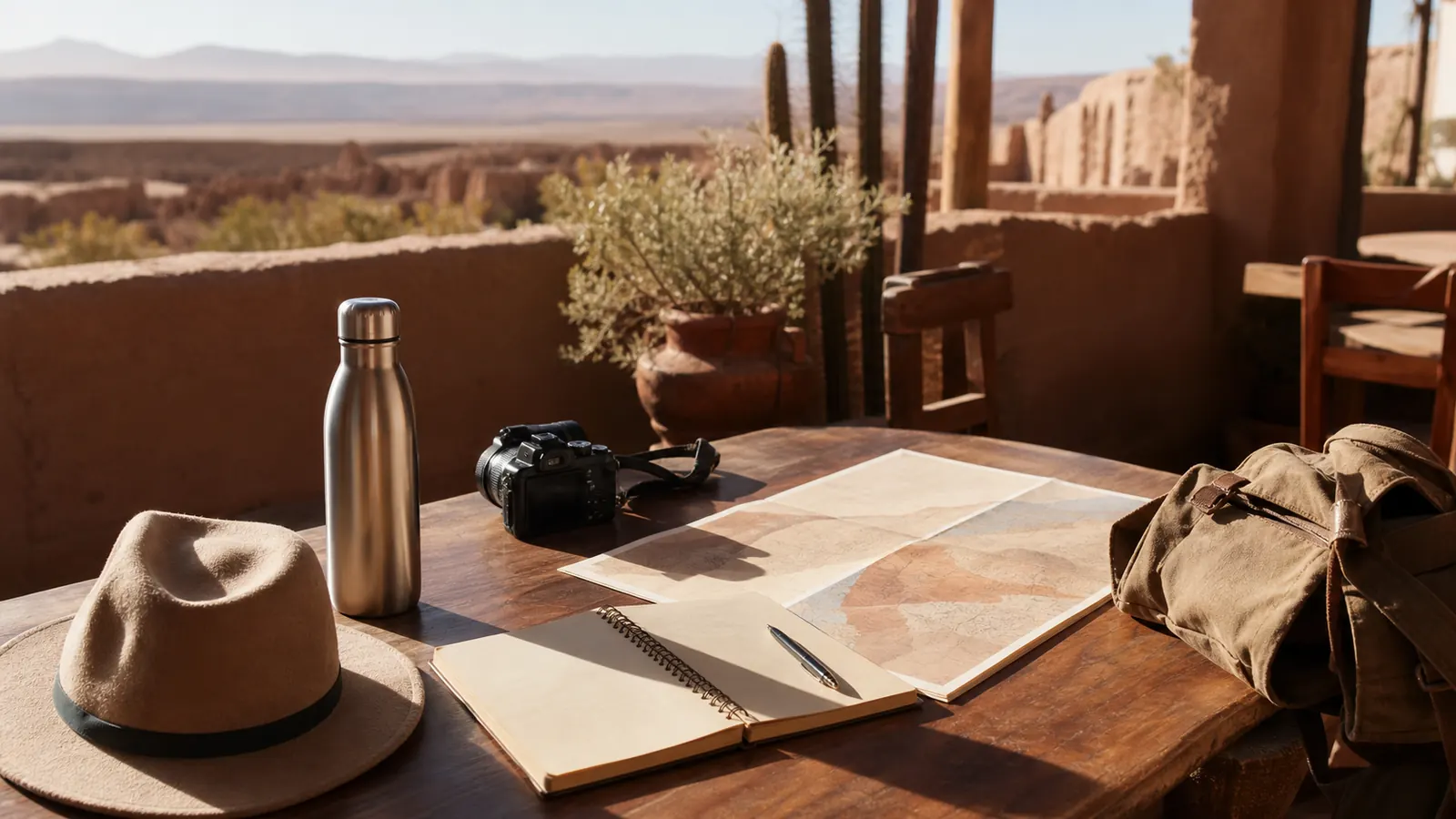
Consider Bolivia if the Altiplano is the real dream
This matters because for travelers with enough time, the Bolivia route toward Uyuni can turn the Atacama chapter into a high-Andean crossing. A successful visit starts with this level of reading: before thinking about photos, transport or the next excursion, understand the constraint that shapes the day.
In practice, it is not a casual add-on: border logistics, altitude, cold, vehicle comfort and weather windows matter. That means accepting adaptation. Valle de la Luna is not an urban attraction with the same script every day; safety and conservation come first.
Practical application
- For travelers with enough time, the Bolivia route toward Uyuni can turn the Atacama chapter into a high-Andean crossing.
- It is not a casual add-on: border logistics, altitude, cold, vehicle comfort and weather windows matter.
- The reward is narrative continuity, because mineral deserts, salt flats and volcano horizons belong to the same broad family while still feeling dramatically different.
Turn this into one simple action: verify, reduce the plan if needed, then keep time to observe. This method makes the experience calmer, more professional and more respectful of the place.
The point is not to make the itinerary more complicated. It is to remove fragile assumptions before they create stress on site. When the plan has room to breathe, the same landscape becomes easier to understand, safer to enjoy and more memorable after the trip.
Use the coast, Santiago or Patagonia as a change of scale
This matters because chile gives several ways to reset after the desert: Pacific coast light, Santiago neighborhoods, wine valleys, Lake District forests or Patagonia wind. A successful visit starts with this level of reading: before thinking about photos, transport or the next excursion, understand the constraint that shapes the day.
In practice, these choices change the body's rhythm by adding humidity, city life, water, vegetation or colder southern space. That means accepting adaptation. Valle de la Luna is not an urban attraction with the same script every day; safety and conservation come first.
Practical application
- Chile gives several ways to reset after the desert: Pacific coast light, Santiago neighborhoods, wine valleys, Lake District forests or Patagonia wind.
- These choices change the body's rhythm by adding humidity, city life, water, vegetation or colder southern space.
- A good route does not need to include everything; it needs one change of scale that makes the memory of Valle de la Luna sharper.
Turn this into one simple action: verify, reduce the plan if needed, then keep time to observe. This method makes the experience calmer, more professional and more respectful of the place.
The point is not to make the itinerary more complicated. It is to remove fragile assumptions before they create stress on site. When the plan has room to breathe, the same landscape becomes easier to understand, safer to enjoy and more memorable after the trip.
Build a future contrast without forcing it into the same trip
This matters because not every continuation has to happen immediately after San Pedro. A successful visit starts with this level of reading: before thinking about photos, transport or the next excursion, understand the constraint that shapes the day.
In practice, a traveler who loves extreme landscapes may later want the opposite: tropical rain, island food, night markets, temples or warm sea air. That means accepting adaptation. Valle de la Luna is not an urban attraction with the same script every day; safety and conservation come first.
Practical application
- Not every continuation has to happen immediately after San Pedro.
- A traveler who loves extreme landscapes may later want the opposite: tropical rain, island food, night markets, temples or warm sea air.
- Thinking this way turns Valle de la Luna into a reference point for future travel decisions, not only a stop inside one itinerary.
Turn this into one simple action: verify, reduce the plan if needed, then keep time to observe. This method makes the experience calmer, more professional and more respectful of the place.
The point is not to make the itinerary more complicated. It is to remove fragile assumptions before they create stress on site. When the plan has room to breathe, the same landscape becomes easier to understand, safer to enjoy and more memorable after the trip.
Action plan before you go
Use this checklist before committing to the day:
- Check official hours, ticket rules, open sectors and weather notices.
- Choose one main goal: landscape reading, sunset, photography, family comfort or transport decision.
- Carry water, sun protection, a wind layer and closed shoes.
- Keep margin for entry, stops, instructions and the return.
- Stay inside authorized areas even if another visitor crosses a boundary.
- Adjust the plan if wind, dust, heat or fatigue changes the experience.
- Prepare photos without blocking viewpoints or encouraging risky behavior.
- Read official temporary notices again before leaving San Pedro.
This plan does not try to make Atacama predictable. It gives enough structure for surprises to remain manageable, which is exactly what a fragile desert landscape requires.
Frequently asked questions
How many days should I stay after visiting Valle de la Luna?
For most travelers, one extra full day in San Pedro after Valle de la Luna is the minimum that makes the trip feel comfortable. It lets you rest, check weather, clean dust from gear, reorganize water and decide whether the body is ready for a higher excursion. If you have only two nights total, keep the next day simple and avoid chasing every famous Atacama site. With three to five nights, you can build a better rhythm: Valle de la Luna first, then a slower desert or town day, then a more demanding lagoon, geyser or salar route. Travelers arriving from long international flights often underestimate dryness, altitude and sun. The strongest memories usually come from choosing fewer experiences and being present for them, not from collecting place names with no recovery time between them.
Is Bolivia a good next destination after Valle de la Luna?
Bolivia can be an excellent continuation if you have enough time, patience and tolerance for altitude. The Uyuni route continues the visual language of the desert with salt flats, volcanoes, lagoons and wide horizons, so it feels connected to the Atacama experience. The challenge is that it is logistically heavier than a normal day trip. You need to think about border formalities, cold mornings, vehicle comfort, remote roads, basic accommodation in some programs and how your body reacts above higher elevations. It is best for travelers who see the transfer itself as part of the journey rather than a quick connection. If you are short on time, sensitive to altitude or traveling with children, a Chile-based extension around San Pedro may be more comfortable and still very rewarding.
Should I go to Patagonia after the Atacama Desert?
Patagonia is a powerful contrast after Atacama because it replaces mineral dryness with wind, water, forests, glaciers and huge southern distances. It can make the whole trip feel epic, but it also changes the budget, clothing, weather risk and travel pace. Moving directly from San Pedro to Patagonia usually means flights, connections and a mental reset rather than a smooth ground route. If your trip is built around iconic Chilean landscapes, the contrast can be beautiful: one chapter of desert geology and another of ice, mountains and moving weather. If your time is limited, consider whether you would enjoy a slower northern journey more than a rushed north-to-south leap. Patagonia deserves margin in the same way Valle de la Luna deserves respect for light and weather.
How can creators turn the next destination into a stronger story?
Creators should avoid treating each destination as a separate highlight reel. A stronger story uses Valle de la Luna as the opening argument: what does extreme dryness reveal about travel, silence, geology, fragility or personal scale? The next destination should answer or complicate that idea. A lagoon route might expand the mineral story through color and altitude. The coast might introduce water after aridity. Santiago could add urban culture after silence. Patagonia can show wind and ice after heat and dust. A future tropical journey can show the opposite climate and rhythm. The content becomes more memorable when captions and video sequences explain why the route moved in that direction. This approach also helps the audience understand practical choices: rest days, clothing, transport and why some famous places were intentionally left out.
What is the most responsible way to plan the next leg?
The responsible route is usually the one with enough margin. That means not pushing altitude too quickly, not adding a long transfer after a late sunset, not relying on outdated opening information and not pressuring guides or drivers to bend local rules. It also means thinking about water, waste, fatigue, road conditions and whether the destination is being treated as a real place rather than a backdrop. In Atacama, a smaller plan can be more respectful because it reduces rushing, risky viewpoints and careless packing. Before leaving San Pedro, check official information, confirm pickup times, ask what clothing is needed, carry reusable essentials and decide what can be removed from the schedule if weather changes. The best next chapter protects the memory of Valle de la Luna instead of exhausting it.
Sources and editorial caution
Practical details change. Opening hours, prices, closures and site rules must be checked on the official Valle de la Luna ticketing channel and the CONAF page for Reserva Nacional Los Flamencos before making a final plan.
For official context, check current information from CONAF on Reserva Nacional Los Flamencos and the Valle de la Luna visitor channel. For wider Chile inspiration, the national tourism portal Chile Travel is useful for comparing desert, coast, wine regions and Patagonia.