This guide is written for travelers, families, photographers and creators who want practical ways to reduce disposable items while respecting a dry and fragile desert environment. The goal is to handle preparing a lower-waste Valle de la Luna visit with practical judgment: what to check, what to avoid, and how to keep enough margin for the desert to feel memorable rather than stressful.
The promise is simple: make responsible preparation simple enough to follow on the actual day, even when wind, dust, heat and group timing make decisions harder. Keep the desert safety and packing tips and the Valle de la Luna access guide open as companions, because they turn this advice into day-of decisions.
To keep the habit going beyond Chile, Beat Plastic Pollution is a useful place to explore broader ideas for reducing plastic in daily life and travel.
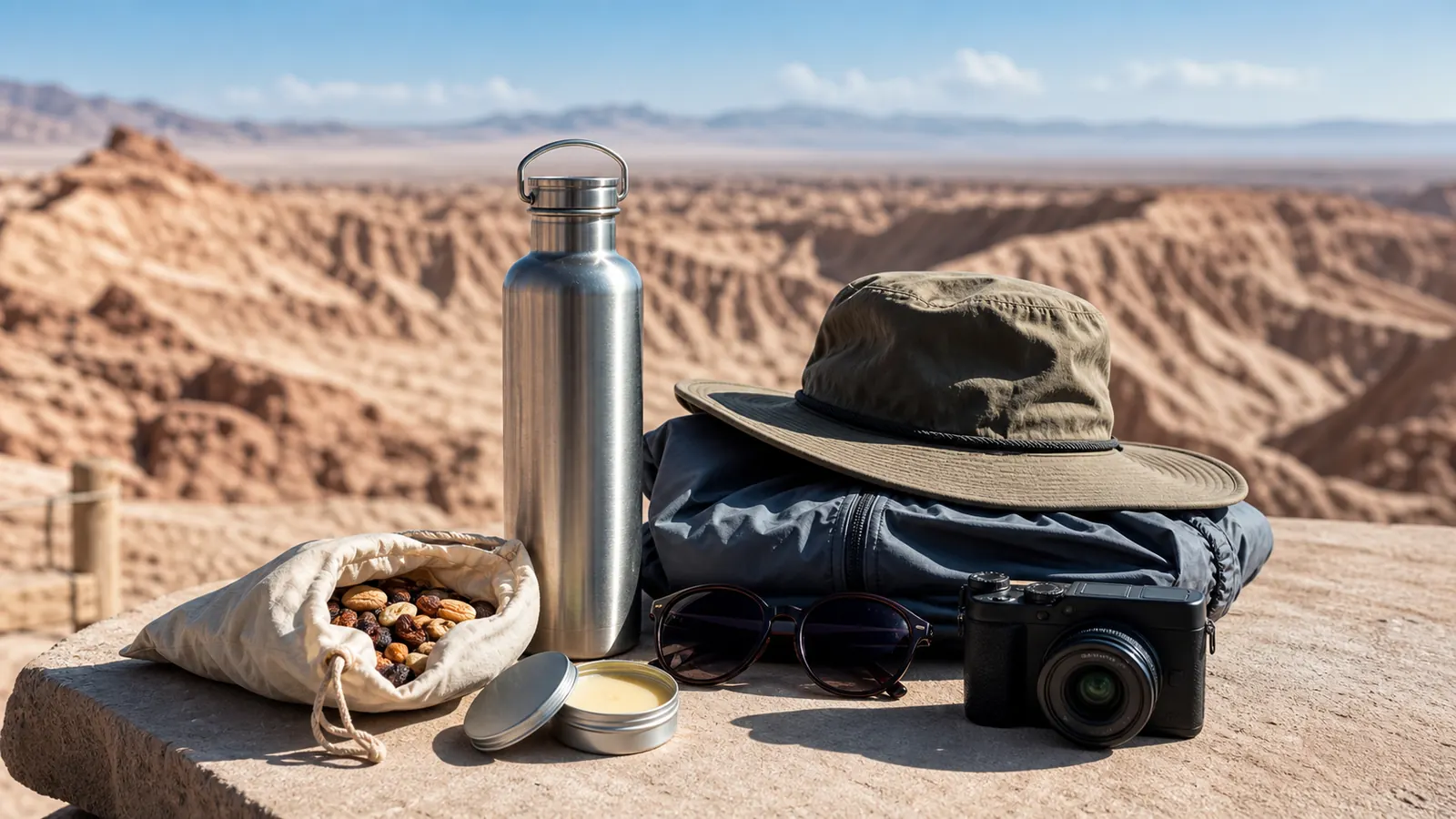
Why plastic feels different in a dry desert
This matters because in Valle de la Luna, even a small wrapper can travel quickly with wind and remain visible against pale salt and clay. A successful visit starts with this level of reading: before thinking about photos, transport or the next excursion, understand the constraint that shapes the day.
In practice, the environment is dry, exposed and fragile, so a careless item does not disappear in the way a visitor might imagine. That means accepting adaptation. Valle de la Luna is not an urban attraction with the same script every day; safety and conservation come first.
Practical application
- In Valle de la Luna, even a small wrapper can travel quickly with wind and remain visible against pale salt and clay.
- The environment is dry, exposed and fragile, so a careless item does not disappear in the way a visitor might imagine.
- Thinking about waste before leaving San Pedro is easier than trying to improvise once sun, dust and group timing take over.
Turn this into one simple action: verify, reduce the plan if needed, then keep time to observe. This method makes the experience calmer, more professional and more respectful of the place.
The point is not to make the itinerary more complicated. It is to remove fragile assumptions before they create stress on site. When the plan has room to breathe, the same landscape becomes easier to understand, safer to enjoy and more memorable after the trip.
Prepare the kit before leaving San Pedro
This matters because a lower-waste visit starts in the room, hostel, hotel or rental car before the ticket check. A successful visit starts with this level of reading: before thinking about photos, transport or the next excursion, understand the constraint that shapes the day.
In practice, refill bottles, portion snacks, remove excess packaging and place one small pouch in an accessible pocket for anything you must carry back. That means accepting adaptation. Valle de la Luna is not an urban attraction with the same script every day; safety and conservation come first.
Practical application
- A lower-waste visit starts in the room, hostel, hotel or rental car before the ticket check.
- Refill bottles, portion snacks, remove excess packaging and place one small pouch in an accessible pocket for anything you must carry back.
- This small preparation keeps the visit focused on the landscape rather than on searching for bins, shops or last-minute solutions.
Turn this into one simple action: verify, reduce the plan if needed, then keep time to observe. This method makes the experience calmer, more professional and more respectful of the place.
The point is not to make the itinerary more complicated. It is to remove fragile assumptions before they create stress on site. When the plan has room to breathe, the same landscape becomes easier to understand, safer to enjoy and more memorable after the trip.
Low-waste field plan
A cleaner visit in five simple moves
The goal is not perfection. It is to remove the most avoidable disposable items before the desert makes small mistakes harder to fix.
Refill
Fill bottles before leaving San Pedro and carry more water than you expect to drink.
Pack loose
Use cloth pouches, boxes or tins for snacks instead of wrappers that fly away in wind.
Protect
Choose reusable sun and dust protection: hat, scarf, sunglasses and a wind layer.
Carry out
Keep a small pouch for every receipt, wrapper, tissue or broken item until you return.
Share calmly
Show clean habits without shaming others; useful examples travel further than lectures.
Plan water without disposable bottles
This matters because water is non-negotiable in Atacama, but single-use bottles are often a symptom of late planning rather than a necessity. A successful visit starts with this level of reading: before thinking about photos, transport or the next excursion, understand the constraint that shapes the day.
In practice, use a reliable reusable bottle, add a second container for longer outings and confirm refill options before leaving town. That means accepting adaptation. Valle de la Luna is not an urban attraction with the same script every day; safety and conservation come first.
Practical application
- Water is non-negotiable in Atacama, but single-use bottles are often a symptom of late planning rather than a necessity.
- Use a reliable reusable bottle, add a second container for longer outings and confirm refill options before leaving town.
- The aim is practical: carry enough water for heat, wind and waiting time while reducing avoidable packaging.
Turn this into one simple action: verify, reduce the plan if needed, then keep time to observe. This method makes the experience calmer, more professional and more respectful of the place.
The point is not to make the itinerary more complicated. It is to remove fragile assumptions before they create stress on site. When the plan has room to breathe, the same landscape becomes easier to understand, safer to enjoy and more memorable after the trip.
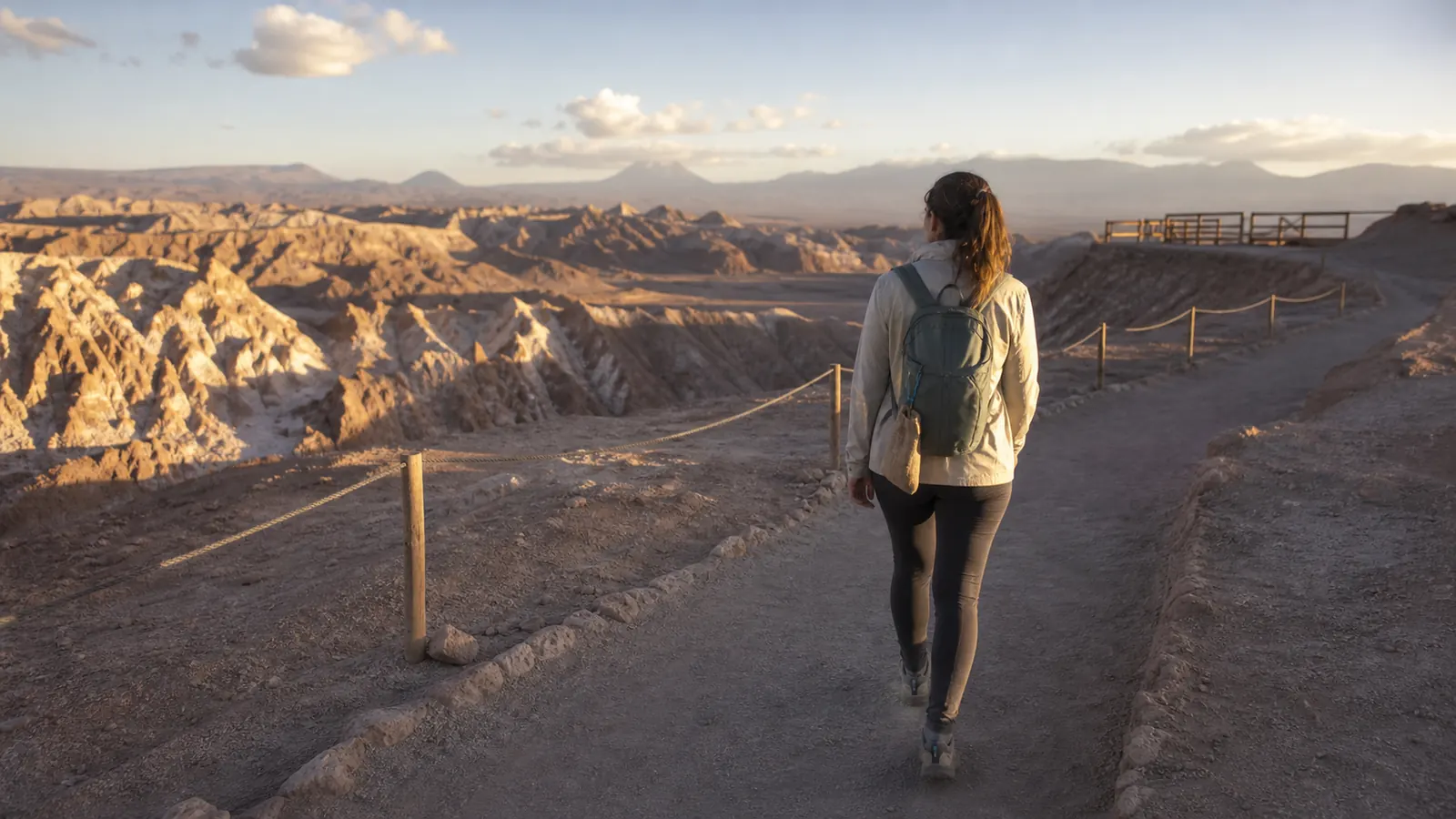
Rethink snacks, sunscreen and small items
This matters because wrappers, tissues, wipes and small caps are the items most likely to escape a bag when wind rises. A successful visit starts with this level of reading: before thinking about photos, transport or the next excursion, understand the constraint that shapes the day.
In practice, choose simple snacks in cloth bags or boxes, apply sunscreen before the dustiest sections and keep tiny items inside zipped pockets. That means accepting adaptation. Valle de la Luna is not an urban attraction with the same script every day; safety and conservation come first.
Practical application
- Wrappers, tissues, wipes and small caps are the items most likely to escape a bag when wind rises.
- Choose simple snacks in cloth bags or boxes, apply sunscreen before the dustiest sections and keep tiny items inside zipped pockets.
- A responsible kit is not necessarily heavier; it is simply organized so nothing loose becomes part of the desert.
Turn this into one simple action: verify, reduce the plan if needed, then keep time to observe. This method makes the experience calmer, more professional and more respectful of the place.
The point is not to make the itinerary more complicated. It is to remove fragile assumptions before they create stress on site. When the plan has room to breathe, the same landscape becomes easier to understand, safer to enjoy and more memorable after the trip.
Make photos and videos part of the habit
This matters because creators can make clean travel visible without turning the post into a lecture. A successful visit starts with this level of reading: before thinking about photos, transport or the next excursion, understand the constraint that shapes the day.
In practice, show the reusable bottle, marked path, compact kit or final carry-out pouch as a natural part of the visit. That means accepting adaptation. Valle de la Luna is not an urban attraction with the same script every day; safety and conservation come first.
Practical application
- Creators can make clean travel visible without turning the post into a lecture.
- Show the reusable bottle, marked path, compact kit or final carry-out pouch as a natural part of the visit.
- This kind of visual detail helps followers understand that responsible travel is not separate from beauty; it is part of making the place worth visiting.
Turn this into one simple action: verify, reduce the plan if needed, then keep time to observe. This method makes the experience calmer, more professional and more respectful of the place.
The point is not to make the itinerary more complicated. It is to remove fragile assumptions before they create stress on site. When the plan has room to breathe, the same landscape becomes easier to understand, safer to enjoy and more memorable after the trip.
Finish the visit cleanly
This matters because the end of the visit is when people are most tired, cold, dusty or distracted by sunset traffic. A successful visit starts with this level of reading: before thinking about photos, transport or the next excursion, understand the constraint that shapes the day.
In practice, before leaving the viewpoint or vehicle, do one quiet check: pockets, seat, camera bag, snack pouch and ground around your feet. That means accepting adaptation. Valle de la Luna is not an urban attraction with the same script every day; safety and conservation come first.
Practical application
- The end of the visit is when people are most tired, cold, dusty or distracted by sunset traffic.
- Before leaving the viewpoint or vehicle, do one quiet check: pockets, seat, camera bag, snack pouch and ground around your feet.
- A clean exit protects the landscape and also gives the group a calmer final memory of the desert.
Turn this into one simple action: verify, reduce the plan if needed, then keep time to observe. This method makes the experience calmer, more professional and more respectful of the place.
The point is not to make the itinerary more complicated. It is to remove fragile assumptions before they create stress on site. When the plan has room to breathe, the same landscape becomes easier to understand, safer to enjoy and more memorable after the trip.
Action plan before you go
Use this checklist before committing to the day:
- Check official hours, ticket rules, open sectors and weather notices.
- Choose one main goal: landscape reading, sunset, photography, family comfort or transport decision.
- Carry water, sun protection, a wind layer and closed shoes.
- Keep margin for entry, stops, instructions and the return.
- Stay inside authorized areas even if another visitor crosses a boundary.
- Adjust the plan if wind, dust, heat or fatigue changes the experience.
- Prepare photos without blocking viewpoints or encouraging risky behavior.
- Read official temporary notices again before leaving San Pedro.
This plan does not try to make Atacama predictable. It gives enough structure for surprises to remain manageable, which is exactly what a fragile desert landscape requires.
Frequently asked questions
Can I visit Valle de la Luna without using single-use plastic?
Yes, at least for the main avoidable items, if you prepare before leaving San Pedro. A reusable bottle, a second water container, cloth snack pouch, small waste pouch and simple sun gear cover most of the practical needs of a half-day visit. The point is not to pretend every trip can be perfectly free of disposable material. Flights, transfers, medicine, receipts and packaged supplies can still appear. The useful goal is to remove the items most likely to be purchased at the last minute or lost in the wind: water bottles, loose wrappers, plastic bags and small caps. Pack at the hotel or hostel while you still have light, space and a table. Once you reach the desert, the environment is exposed and the visit moves around official timing, so preparation matters more than good intentions.
How much water should I carry if I avoid disposable bottles?
Carry enough water for heat, dryness, walking, waiting time and the return, not only for the minutes you expect to spend outside the vehicle. The exact amount depends on season, body size, transport mode, time of day and whether you are biking, touring or driving. A useful habit is to fill one main reusable bottle and add a backup container when the day is longer, hotter or less predictable. Cyclists need to be especially conservative because wind and sun can make a short distance feel much longer. Avoid reducing water just to reduce weight; hydration is a safety issue. The better solution is planning, not scarcity: refill in San Pedro, check whether your tour provides water responsibly and keep the bottle accessible rather than buried under camera gear.
What should I do with waste if there are no convenient bins?
Keep it with you until you return to a proper disposal point. This sounds simple, but it requires a dedicated pouch because small waste disappears easily inside a camera bag, car pocket or jacket. Use a washable fabric pouch, an old zip bag you already own or a small container that closes securely. Put every receipt, wrapper, tissue, fruit sticker or broken item in the same place. Do not place waste on rocks while taking photos, even for a moment, because wind can move quickly. If you are in a tour vehicle, ask where the group should keep waste rather than assuming the guide will notice everything. The cleanest habit is to make the carry-out pouch as normal as sunglasses or sunscreen.
Is this only about plastic, or also about protecting the formations?
It is both. Waste reduction is one part of responsible visiting, but Valle de la Luna also depends on marked paths, boundaries and respect for fragile salt and clay formations. A visitor can bring a reusable bottle and still cause damage by stepping outside the authorized route for a photo. The habits belong together because they come from the same idea: the landscape is not a disposable setting. Stay on trails, do not collect salt or rocks, avoid drones unless a current official rule clearly allows them, keep pets away if rules prohibit them and listen to guides or wardens. Plastic is a visible example, but the deeper principle is restraint. A lighter kit and a respectful path choice both help the place remain readable for the next visitor.
How can families or groups make this easy?
Make one person responsible for the shared carry-out pouch, but make every traveler responsible for their own bottle and small items. Families can portion snacks before departure, choose containers children can open without wrappers flying away and do a quick ground check before leaving each stop. Groups can agree on a simple rule: nothing loose in pockets during windy viewpoints, and no one leaves until the seating area and the ground around bags are checked. Keep the tone practical rather than moralizing. People follow habits more easily when they are simple, visible and repeated at natural moments: before departure, before leaving the vehicle, before moving from a viewpoint and when returning to San Pedro. The goal is a cleaner visit that still feels relaxed and enjoyable.
Sources and editorial caution
Practical details change. Opening hours, prices, closures and site rules must be checked on the official Valle de la Luna ticketing channel and the CONAF page for Reserva Nacional Los Flamencos before making a final plan.
Useful references for this guide include the CONAF page for Reserva Nacional Los Flamencos, the Valle de la Luna visitor channel and the Our World in Data plastic pollution overview for broader context.